



Negros Power’s September Rate Drops as Regional Price Cap Softens WESM Impact
Negros Power consumers saw a slight decrease in their average residential electricity rate in September 2026, despite elevated prices in the Wholesale Electricity Spot Market, or WESM.
The average residential rate dropped to ₱14.2487 per kilowatt-hour in September, down from ₱14.2787 in August. While the decrease was just ₱0.0300 per kilowatt-hour, rates would have been much higher without the Regional Secondary Price Cap.

What Is the Regional Secondary Price Cap?
The Regional Secondary Price Cap (RSPC) is an Energy Regulatory Commission rule that helps keep unusually high WESM prices from affecting consumers too much.
WESM is where electricity is traded. Prices can go up quickly if there is not enough supply, demand goes up, or it costs more to produce electricity.
According to ERC Order No. 2026- 048-MC, released on September 10, 2026, the price cap was set separately for the Visayas and Mindanao grids. The rule also applied to bills from August 2026.
How Did the Price Cap Affect September Rates?
Negros Power Vice President and COO Engr. Joe Mel Zaporteza shared that the average WESM price in Visayas reached ₱18.59 per kilowatt-hour.
With the Regional Secondary Price Cap in place, an ERC simulation showed the price would be ₱8.47 per kilowatt-hour, which is about 54 percent lower.
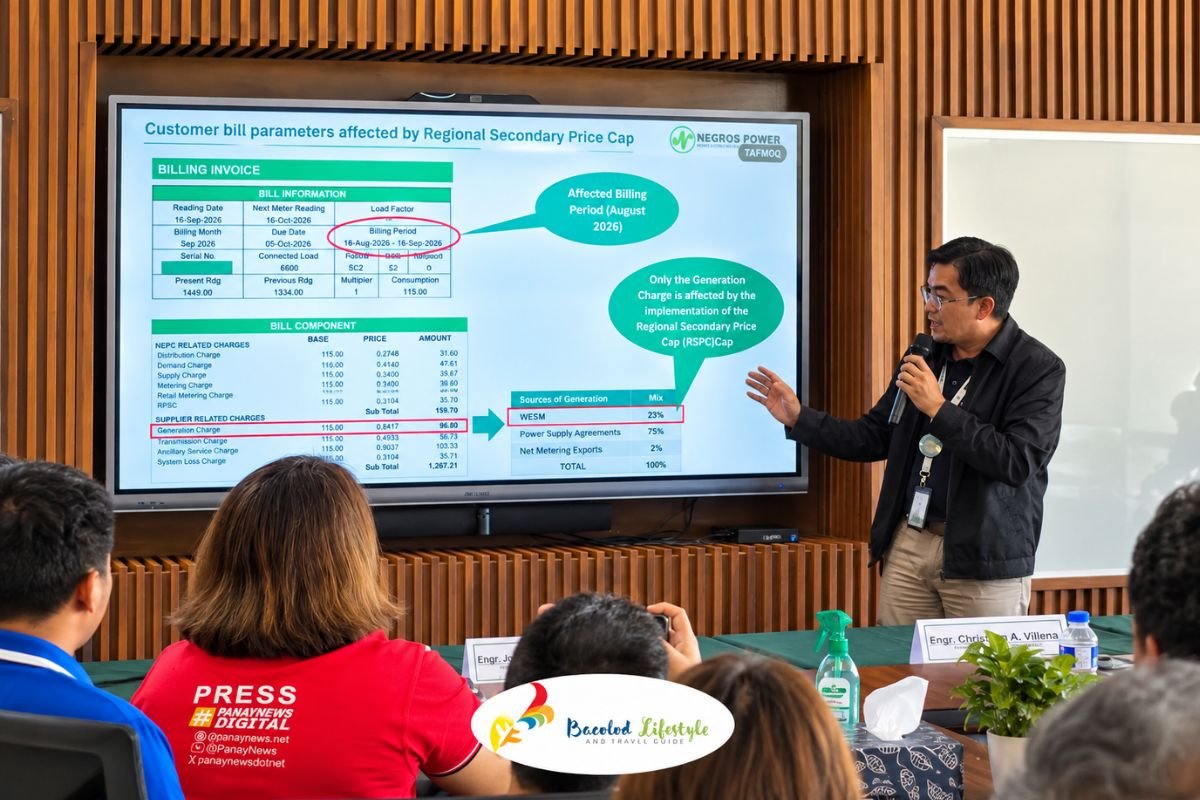
However, this does not mean that customers saw a 54 percent drop in their total bills. The price cap affects only the WESM portion of the electricity cost.
Negros Power gets about 23 percent of its electricity from WESM, 75 percent from Power Supply Agreements, and 2 percent from net metering exports.
Since WESM is only part of the supply mix, changes in its price do not cause the same percentage change in the final residential rate.
September Rate With and Without the Cap
If there had been no regional price cap or staggered arrangement, Negros Power said the September residential rate would have been ₱17.8337 per kilowatt hour.
This would have meant an increase of ₱3.5550 per kilowatt hour compared to August’s rate of ₱14.2787.
With the price cap and staggered arrangement, the September rate was ₱14.2487 per kilowatt hour, which is ₱0.0300 lower than the previous month.
The generation charge also changed a lot. Without the price cap, it would have been about ₱11.36 per kilowatt-hour. With the cap, it was around ₱8.42 per kilowatt-hour, close to August’s ₱8.48.
What This Means for Consumers
The Regional Secondary Price Cap does not directly discount the full electricity bill. Its main job is to lessen the impact of very high WESM prices on the generation part of the rate.
A household’s bill still depends on how much electricity is used and other charges in the monthly rate. Those who use more electricity will notice a bigger change in their bill than those who use less.

Electricity rates can also change each month because of supply, demand, fuel costs, contracts, and wholesale market changes.
For September 2026, the key figures are:
- Average residential rate with the price cap: ₱14.2487 per kilowatt-hour
- August residential rate: ₱14.2787 per kilowatt-hour
- Simulated rate without the price cap: ₱17.8337 per kilowatt-hour
- Simulated Visayas WESM price: ₱18.59 per kilowatt hour
- WESM price with the regional cap: ₱8.47 per kilowatt-hour
The September numbers show that the Regional Secondary Price Cap helped protect Negros Power customers from high wholesale electricity prices.